
Classes & Workshops
Writing Co-Lab offers online craft classes and workshops in creative nonfiction, fiction, poetry, and translation. Whether you’re looking to deepen your publishing acumen, ignite your imagination, or cultivate joy, we’ve got something for you. Want to keep up? Get on the newsletter.
Reading Like a Writer: A Quarterly Book Club for Writers, with Ansley Moon
This is no ordinary book club. In Reading Like a Writer, we will read closely and deliberately, dissecting literature to reveal its secrets. Together, we will examine how accomplished writers use language, structure, and voice to create powerful effects on readers. The practice of reading closely, of paying attention to the craft decisions on the page, makes us stronger, more intentional writers in our own work.

The Wounded Gazelle: Writing the Ghazal in English; 6 sessions with Javeria Hasnain
This course is for poets working at any level in their poetry who are interested in learning about the form of the "Ghazal" including its history, elements, and adaptations into the English language. Students will leave with a portfolio of 5-6 ghazals of their own.
Get Uncomfortable: Writing and Sustaining Ethical Tension in Fiction, 1 session with Uttama Patel
Compelling fiction emerges from characters who act against expectation—morally, socially, or emotionally. But our impulse as writers is often to overprotect them, unconsciously intervening to justify their motives or force a premature redemption. This class resists those safety nets. Combining psychologically-informed craft discussion with close readings and generative exercises, we will be writing against our moral reflexes and actively engaging with discomfort to build and sustain unputdownable narrative tension.
Low-Stakes Creative Writing Essentials: Intro to Journaling, Blogging, and Zine-Making (Expanded Edition!), 4 sessions with Ravynn K. Stringfield
Have you been interested in pursuing writing in a more dedicated way, but feel like you might need more practice honing your voice before you aim for publication? Or maybe your interests speak to a very niche audience, and you want more control over your words? This course will provide ways to get started writing for a small, curated audience—even if it’s an audience of one!

The Lab, North America Edition, with Brian Gresko
In search of writing community? The Lab is an accountability and coaching program designed to spark your creativity, draw you to the page, and keep you writing. It doesn’t matter your genre or level of experience, The Lab is a place to experiment and play, form connections with other artists, and develop your ideas from inception to final draft, and it only costs $25 per monthly session.

Generative Writing Through Playful Interaction, 1 session with Anca L. Szilágyi
This class centers playful interaction and collaboration as a way to shake up the creative process and find new ways into writing. Who says writing must always be solitary? We’ll play associative improv games, mine memory, and use artifacts to create prompts for each other and explore pursuing what stirs us to write.
Power Hour: Write Now! A generative session with Jiordan Castle
A one-hour generative class to give you guidance and inspiration. We’ll read a series of diverse pieces and use timed prompts to create fresh work. Not a minute will be wasted! You’ll leave with a variety of short pieces you can expand, along with a list of recommended resources. Looking for inspiration? This incredible class is for you.

Burning Down the House— Writing about the Surreal and the Strange: 6 Week Generative Workshop with Jenna Tang
Strange and surreal stories are deeply connected to narratives of migration, local folklore, belief systems, and emotional landscapes that reflect what each society brings to our histories and storytelling. In this six-week generative writing workshop, we’ll explore such writing across genres, including novels, short stories, poetry, graphic novels, and more, and we’ll be reading from works brought into English from different languages, including writing from Iran, Taiwan, South Korea, Southeast Asia, and various countries in Latin America.
Crossing—On Translated Literature and Pathways to Literary Translation: 6 Week Workshop with Jenna Tang
What are the pathways like, breaking into the world of literary translation? How do we go from finding a book that speaks to us in another language, and eventually publishing the work and interacting with English-speaking audiences? In class, we’ll do weekly readings that include essays about translations and excerpts of books translated from various languages, and we’ll workshop short translation practices or translation-in-progress from each student. This is a non-language-specific workshop and there is no limit in the genres to submit. If you are just starting a project, or already have a project in-progress, this is the workshop for you.

How to Write Sex Without Shame: A Filthy Generative Quartet with Steve Almond
In this naughty foursome of classes, we'll look at the work of writers ranging from Marguerite Duras to Tony Morrison to Per Olov Enquist, in an effort to set down on the page the embodied desires that we, and our characters, struggle towards and against. We'll devote each week to a different aspect of sex, from foreplay to afterglow, from the fantasies we bear alone to the ecstasies of bodies in congress.
Writing Subversive Body Narratives: 4 week seminar & workshop with Mary Kate McGrath
In this short course and workshop, students will explore new ways to write about the illness, disability, or the body through experimental poetry and prose, moving beyond or subverting a medical perspective. Students will be given a variety of generative prompts, encouraging them to consider how a social, political, emotional, or personal lens interacts with narratives about the body. We’ll read work by writers doing innovative work around the body, illness, and disability, including Katie Farris, Elaine Scarry, Torrin A. Greathouse, Melissa Febos, Ilya Kaminsky, and Nicole Sealey, studying the craft behind them. Each student will have the opportunity to workshop at least one piece in a supportive environment.

Writing for Women on the Verge, 6 sessions with Amy Shearn
A generative writing class for women (or anyone who identifies as female / nonbinary / gender-nonconforming) who feel like they miiiiiight be losing it. Instead of running away from home... try this class first? Whether you're overwhelmed or stretched thin; wound up or worn out; blocked, stuck, or just feel like making some time to write each week, this class is a way to reconnect with your creative core. You can write in any genre you like—nonfiction, fiction, poetry, stream-of-consciousness, journaling, fragments, rants, letters, lists—whatever feels right each day. This class is about process, creativity, and making some space for your own voice. It's just an hour, and there's no homework. Sneak it in on your lunch break (or while the kids are watching a movie; they'll live). It'll be encouraging, regenerative, nourishing, and fun.

The Art of Travel Writing: How to Read—and Write for—Travel Magazines, 2 session craft and generative class with Matt Ortile
This two-day intensive (taught over the course of two Saturdays) will introduce students to the fundamentals of travel journalism. By reading contemporary magazine articles (and some historical travelogues) and through generative exercises, students will leave the class with tools to begin trying out personal and professional travel writing.
Flop Era: Writing the Loser, a 4 week seminar & workshop with Mary Kate McGrath
Everyone loses sometimes, but at what point does a character become an undeniable loser? In this short course and workshop, we’ll explore how to write all varieties of losers, failures, flunk outs, and flops. Students will explore the craft questions behind writing losers, like what qualities are indelible to losers? What can writing losers and flops teach us about agency in fiction and beyond? How can losers enable writers to comment on larger cultural forces, such as economic alienation or the role technology plays in our lives? The class is open to writers of any experience level with an interest in fiction or prose writing.
Power Hour: Write Now! A generative session with Jiordan Castle
A one-hour generative class to give you guidance and inspiration. We’ll read a series of diverse pieces and use timed prompts to create fresh work. Not a minute will be wasted! You’ll leave with a variety of short pieces you can expand, along with a list of recommended resources. Looking for inspiration? This incredible class is for you.
Spooks, Portals, & the Upside-Down: Writing Weird for Joy & Liberation, 1 session with Lauren Veloski
Join screenwriter/teacher Lauren Veloski for a 2-hour writing “playdate” filled with all the upending possibilities of the speculative genre. The spooky season surrounding Halloween is of course primetime for ghouls and monsters and menace. We can ALSO consider this time of year a portal for ALL flavors of stretched and scrambled reality. This workshop is your invitation to peer more deeply through the looking glass towards Maximum Expansion in your writing. Together, we’ll try our hands at the speculative genre—moving your craft towards curious, irreverent, and fantastically unhinged ideas!
Dancing on the Page, 3 generative movement and writing sessions with Sari Wilson
In an hour and a half, this class will leave you refreshed and invigorated and with some new tools for “dancing on the page.” There's no homework, though there’s a suggested reading list and “invitations” for reading and viewing dance. It'll be explorative, nourishing, and fun. Great for anyone curious about bringing the body into writing practice. All genres welcome; no dance experience required!

Writing About Fashion: 4 Fabulous Sessions with Elizabeth Teets
This class is for those who love fashion and style — from Haute Couture to thrift store hunting — but feel like outsiders when it comes to the writing world. This class won't focus on the work of industry professionals but rather writing about the world of fashion and style from the personal lens. Anyone who wears clothes (at least sometimes) and has an appetite to write is welcome.
Increase Your Risk: 4 Sessions Advanced Fiction Intensive with Sara Lippmann
Has your writing hit a plateau? Are you stuck in the murky middle? Or maybe you are sitting on perfectly competent stories that still feel like they're missing something? Or you know you've been holding back? Remove the safety net in this high level course for the dedicated fiction writer. This month-long workshop will explore strategies to increase the risk in our writing: destabilizing, unsettling, and pushing our work closer to the line in an effort to excavate its most honest, urgent, and vital pulse. This intimate, supportive live class on zoom will require active participation, with an accompanying asynchronous slack for prompts, craft materials and additional community discussion. Although there will be generative opportunities, the focus of this workshop is revision with an eye toward publication.
Writing for Women on the Verge, 6 sessions with Amy Shearn (SOLD OUT)
A generative writing class for women (or anyone who identifies as female / nonbinary / gender-nonconforming) who feel like they miiiiiight be losing it. Instead of running away from home... try this class first? Whether you're overwhelmed or stretched thin; wound up or worn out; blocked, stuck, or just feel like making some time to write each week, this class is a way to reconnect with your creative core. You can write in any genre you like—nonfiction, fiction, poetry, stream-of-consciousness, journaling, fragments, rants, letters, lists—whatever feels right each day. This class is about process, creativity, and making some space for your own voice. It's just an hour, and there's no homework. Sneak it in on your lunch break (or while the kids are watching a movie; they'll live). It'll be encouraging, regenerative, nourishing, and fun.
The Lab, Asia Edition, with Uttama Patel
In search of writing community? The Lab is an accountability and coaching program designed to spark your creativity, draw you to the page, and keep you writing. It doesn’t matter your genre or level of experience, The Lab is a place to experiment and play, form connections with other artists, and develop your ideas from inception to final draft, and it only costs $25 per monthly session.
Reading Paris: A Month-Long Reading Club, with Matt Ortile (who now lives in Paris)
If you’re dreaming of a season spent in Paris, the European capital of literature and art that has enamored people all over the world since time immemorial, look no further. This summer, we’re traveling from our armchairs—and couches, beds, hammocks, and wherever you love to tuck into your favorite books—with a reading club led by Paris-based travel writer, magazine editor, and Writing Co-Lab instructor Matt Ortile. Through a curated selection of essays, short stories, novels, and memoirs (complete works as well as excerpts) that will transport us to the City of Light.

Writing Beyond: Creative, Hybrid, and Speculative Nonfiction Workshop, 8 sessions with Jami Nakamura Lin
In this more advanced workshop, we’ll discover what it looks like to write beyond: beyond genre/form conventions, beyond what other people have told us a writing life should look like, beyond our doubts. We’ll develop our writing through craft lectures (on topics like language, voice, style, speculation, and publishing), readings, discussion, and workshops. We’ll grow a supportive community, learn to apply feedback, and create a sustainable writing practice that fits with the realities of our lives. While our craft talks and texts will be from the realm of lyric, hybrid, experimental, and speculative nonfiction, students writing any form of creative nonfiction are welcome.

The Art and Craft of Launching a Story, 1 session with Stephanie Feldman
A story must establish a world, a character, and a conflict–and grab the reader–in just a few sentences. Together, we’ll examine first sentences, paragraphs, and pages to discover the power of voice and the mechanics of tension, and open conversation about the foundational elements of a great short story. Bring a rough draft or excerpt for an in-class revision exercise.
It’s a Mood: Using Setting to Define Interiority in Short Stories, 1 session with Lena Valencia
What does a cozy winter getaway look like to someone in a disastrous marriage? What does someone harboring a secret notice at a wild party? Well-defined surroundings are a great way to clue our readers into the emotional depths of our characters. After analyzing fiction that uses place as an insight into its protagonists, we’ll spend this session setting the mood as we craft our own character-driven descriptions of place.
Pacing, Exposition, and Scene (Getting To Your Best Ending of a Short Story), 1 session with Rachel Lyon
The best short stories end with a bang — or a twist, or a moment of ecstasy, poetic connection, or brilliant subversion. If there are as many ways to end a story as there are stories, whatever your project, and whatever mode you write in — whether comic or tragic, ironic or earnest, realist or absurdist — your best ending will be inextricable from the mechanics of your plot. In this class we will look under the hood of a couple of short stories to reverse-engineer their endings through analysis of their pacing, plots, and endings, and spend time workshopping brilliant new endings for our own works-in-progress.
Character and Mystery in the Short Story, 1 session with Anca Szilágyi
We’ll explore the many facets of character development that help create vivid, memorable characters. These include discovering the quirks of your own writing process (what do YOU need to know about a character to get started) and common elements which inform character behavior, and therefore, plot.

Time and Perspective in the Short Story, 1 session with Danielle Lazarin
In this session, we'll consider the effect of time on perspective. How does when a story is told from shape the narrator and in turn, how the story is told—its language and tone, moment selection, and structure? We'll look closely at stories narrated from the near aftermath and long distance from significant events and then practice the tools they offer in our own work.
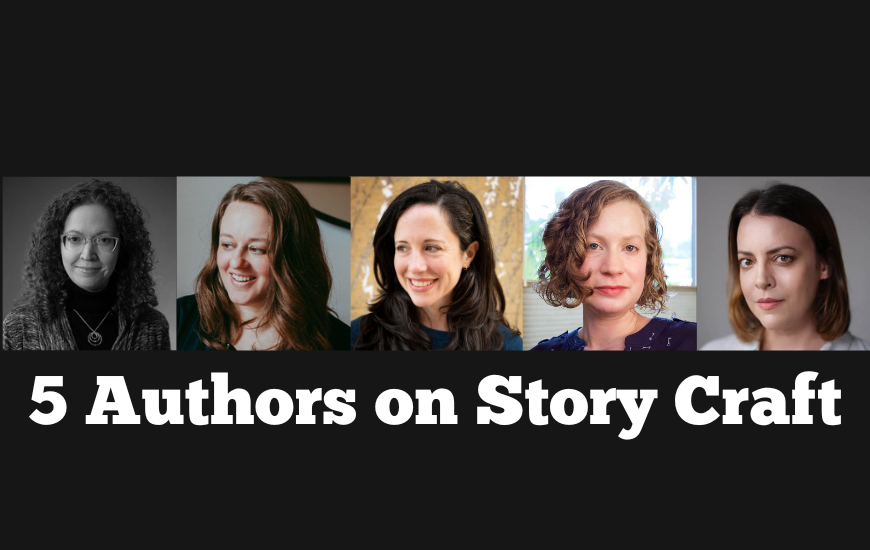
5 Authors on Story Craft: a 6 Session Seminar
Five accomplished and accoladed short story authors join forces to demystify how to write the short story, from beginning to end. With readings, discussion, as well as in-class writing time, you will learn how to closely read stories, decode the author’s craft, and use their techniques to inspire and improve your own creative work. Are you new to writing stories? Or an experienced writer looking to sharpen your skills and approach your craft with a set of fresh eyes? Then these sessions are for you.
MFA Coaching Cohort for 2027 Applications, 6 sessions with Danielle Lazarin
Are you applying to 2027 MFA programs? Don’t go it alone! This cohort is a supportive, structured group focused on navigating the application process with as much confidence and as little stress as possible. Together, we'll walk through choosing programs, selecting samples, soliciting recommendations, writing a compelling personal statement, and staying on track through deadlines so that you have the best chance for admission this season. Whether you're applying in prose or poetry, for a full-time program or a low-residency one, working in cohort provides opportunity for accountability, commiseration, and motivation during what can be an overwhelming and lonely process.
Summer Seminar: Story Structure 101, with Stephanie Feldman
People are natural storytellers—so why are plot and pace so hard to figure out? In one session, we’ll break down the fundamentals of character and conflict to discover tools for creating powerful and satisfying stories of any length. A class for when you realize your project can no longer coast on vibes, or when you’re struggling to figure out what your draft is missing.
West Coast Ungodly Hour Writing Club: Weekday Write-in for our Scholarship Fund with Brian Gresko
Nothing sexy here. Show up to the zoom, cameras on or off, it’s up to you. I will write; you will write. There is solidarity in numbers. We will hold each other accountable as we commit to, or recommit to, or build upon our regular writing practice. No talking allowed. No group sharing. Join and leave the zoom at any time. Please note the club is free, but any and all donations will go directly toward our scholarship fund.

Ungodly Hour Writing Club: Weekday Write-in for our Scholarship Fund, with Sara Lippmann
Nothing sexy here. Everyone has their hour of the day when the words seem to arrive more readily, when the heart and mind feel less at odds. For me, that slot is before dawn, before the critical brain wakes and starts hollering it’s all garbage. I know this, and yet, the trick is showing up. Sound familiar? If so — or if you are curious about ungodly writing — then join me in my bathrobe. (Cameras off.) I will write; you will write. There is solidarity in numbers. We will hold each other accountable as we commit to, or recommit to, or build upon our regular writing practice. Any and all donations will go directly toward the creation of a much-needed scholarship fund here at the Writing Co-lab, with the hopes that we can bring unique and dynamic classes to all by helping to defray the costs for those in need.
Using Known Forms to Generate Humor Pieces, 1 session with Riane Konc
Read any online humor pub, and you’ll start to notice that a lot of published humor pieces start with a simple trick: take something familiar and map it onto something unexpected. In this two-hour craft session, we’ll break down the mechanics of mapping: pairing real-world situations with recognizable formats, templates, genres, or characters. We’ll study examples, experiment with mapping prompts, and generate premises that create instant comedic tension. Students will leave class with several map-based ideas and a repeatable technique they can use anytime they need to spark a new humor piece.
How to Pitch Your Work to Magazines, 1 session craft seminar and workshop with Matt Ortile
In this two-hour seminar and workshop, students will learn how to pitch essays (personal, narrative, reported) to magazine editors for publication. We will study why pitching is an important practice for working writers, as well as what makes a successful pitch, by reading essay excerpts and pitch examples, and trying out brainstorming exercises to write our own essay pitches.
Writing for Women on the Verge, 6 sessions with Amy Shearn (SOLD OUT)
A generative writing class for women (or anyone who identifies as female / nonbinary / gender-nonconforming) who feel like they miiiiiight be losing it. Instead of running away from home... try this class first? Whether you're overwhelmed or stretched thin; wound up or worn out; blocked, stuck, or just feel like making some time to write each week, this class is a way to reconnect with your creative core. You can write in any genre you like—nonfiction, fiction, poetry, stream-of-consciousness, journaling, fragments, rants, letters, lists—whatever feels right each day. This class is about process, creativity, and making some space for your own voice. It's just an hour, and there's no homework. Sneak it in on your lunch break (or while the kids are watching a movie; they'll live). It'll be encouraging, regenerative, nourishing, and fun.
Screenplays by Badass Women (Including YOU!): 5 week Screenwriting Course with Lauren Veloski
Study the greats, become the GREATEST! For 5 weeks, SCREENPLAYS BY BADASS WOMEN offers a supportive, uproariously fun and explorative kaleidoscope of screenwriting study AND practice. This course is designed specifically for newbies wanting to explore the film/TV realm and try their hand at screenwriting, AND more mid-level screenwriters looking for a steady stream of inspiration and fresh takes on the craft. Crucially, the course connects the dots between our lived experiences on Planet Patriarchy, the historically neglected “female gaze,” and our vast creative reach as women writers. Weekly, we’ll deep-dive several of the most groundbreaking screenplays by women, engaging in conversation about what exactly these cinematic worlds offer that’s brilliantly off-kilter and essential, as well as WRITE diligently into our own fresh (first ever?!) screenplay idea.

Abracadabra! The Poem As Prayer & Conjuring, 1 Session with Natasha Oladokun
Poems are acts and invocations. They’re expressions of desire, or confessions of fear or ecstasy, and they’re a powerful way of naming and bringing something imagined yet unrealized into existence. In poems, you build the world. It’s what you do as a writer: abracadabra, create as you speak. In this workshop we’ll read and talk about work by poets who invite the spiritual and metaphysical into the world of their poems—poets who wield language, story, and lyric as deftly as a wand.
Rage on the Page: When Anger Is Your Engine, A Generative Class with Steve Almond
A generative class about anger.
The Personal Essay Is Political: Generative Creative Nonfiction Class, 5 sessions with Brian Gresko
Now more than ever we need you to write and share the story of your body, history, identity, family, and experiences. We need you to put yourself on the page. In this five week course we will read and discuss published personal essays, drawing out specific techniques and approaches to writing as well as inspiration for the bravery it requires to get real with a reader. Each week, students will receive prompts to spark their own work and have the opportunity to write and share a short essay with their peers, which we’ll discuss during class.
Leaving Home and Separation Anxiety, A Generative Class with Steve Almond
A generative class about parenting.
Beyond the Braided Essay: Developing Structure and Style in a Personal Essay, 2 session craft and generative class with Matt Ortile
In this two-hour seminar and generative workshop, students will learn foundational elements of structure and style in a personal essay. We will study the anatomy of an essay in class—particularly the pros and cons of the so-called “braided essay”—and practice with writing tools that can shape our ideas into coherent narratives and lead to a first draft.
Pet Sounds: Writing About the Animals in Our Lives, A Generative Class with Steve Almond
A generative class about our pets.

Prose from Imagery: 1 Session Craft Seminar with Chin-Sun Lee
Stories come to us from many sources: a lived experience, a conversation, a niggling question—or an image. Some writers are naturally visual while others lean toward interiority, perhaps missing all the rich visual cues surrounding us. In this generative workshop, we’ll focus on the ways that images can provoke associations that in turn, become compelling narrative.
Making the Cut: Using Collage to Inspire Your Writing, a hybrid generative session with Lena Valencia
In this two-hour session, we’ll explore how techniques from the visual medium of collage can reinvigorate our writing practice.
More is More: Revision as Generative Act, 6 sessions with Danielle Lazarin
What if I told you that the best way to revise was writing more, writing in, to think in expansion rather than contraction? In this six week hands-on craft class, I'll teach you how to refine your draft through addition. An underutilized tool of revision, generative work is as necessary for completed drafts —fiction that already has made its preliminary choices regarding setting, characters, voice, timeframe, and so on— as it is in early drafting stages. I'll help you find the same freedom and play you felt when starting a project at this stage when you're trying to bring it closer to the finish line.
Love & Other Disasters: That Time You Chose Wrong, A Generative Class with Steve Almond
A generative class about that lover you really shouldn’t have taken.
How to Write Dangerous Prose: A Generative 4 Part Series with Steve Almond
Back by popular demand! Truth is the Arrow, Mercy is the Bow: A DIY Manual for the Construction of Stories author Steve Almond returns with a fresh quartet of generative classes. For writers of any level, from beginners to published veterans, these classes are your chance to cast off your inhibitions and rock out! All sessions will be both live and recorded.
Envisioning Your Story Collection: A Practical Seminar on Assembling and Publishing, 1 session with Danielle Lazarin
Ever wonder if your numerous short stories are a collection, and what to do with them if you think they could be with a little (or a lot of) effort? How do you know if stories belong together, what might be missing to unify them, or how to order, talk about, and ultimately sell them as a cohesive book? In this two-hour seminar, I’ll walk you through the experience of conceptualizing and completing a short story collection that’s ready for agents and editors.